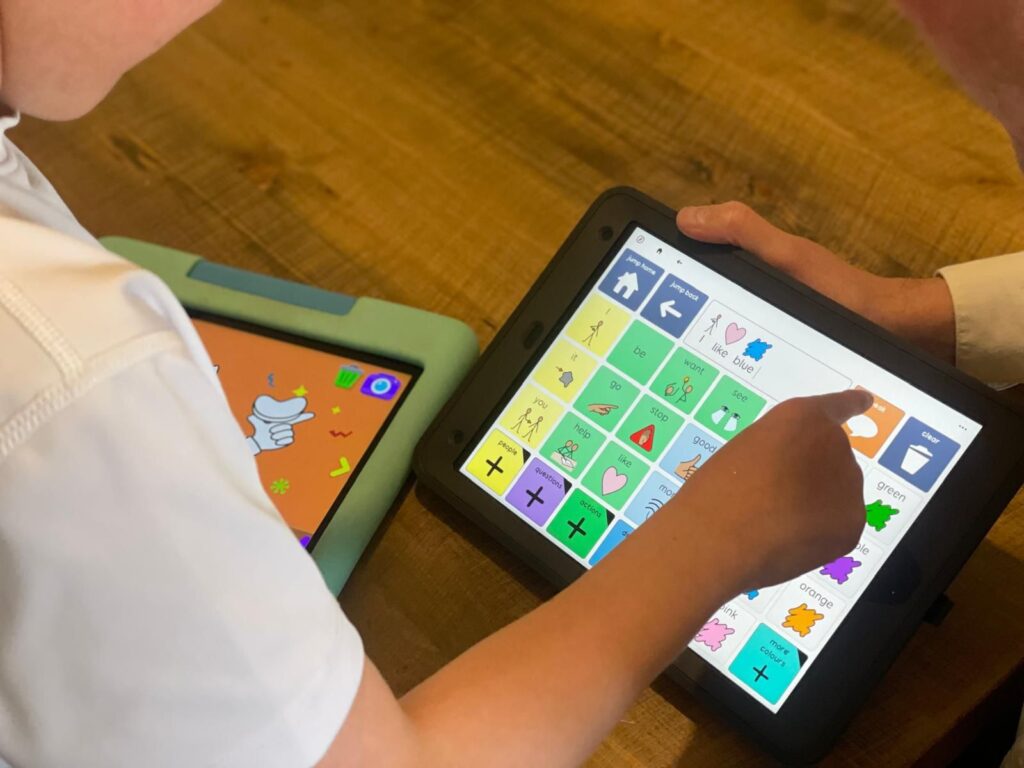

When you work with AAC and assistive technology users with complex needs, the start of every school year involves a lot of work and support.
For all children there will be anxieties. A new school year, a new teacher, perhaps a more challenging curriculum. For the AAC user, though, those anxieties are about being able to communicate, and being supported to do so.
For those of us who support AAC users, there’s anxiety too. Quite often I need to train a new staff member, or sometimes a whole class team. That means training in how to mount the device, the access method, the software, the vocabulary set, modelling, embedding AAC into everyday practice, and differentiating work by creating bespoke content.
For the AAC user, nothing has changed. They leave at the end of July and return in September, most likely with the same device and the same vocabulary. But their support network has changed, and that can be a real setback.
It’s my job to make sure everything is sorted out, and I do it gladly. But getting the equipment right is only half of it. The bigger challenge is supporting the people around them. Everyone in that person’s day needs to understand the system, know how to use it, and build communication into the everyday. Having everything ready on the first day means very little if, by half term, nobody is modelling on the device.
That’s true wherever someone is on their AAC journey. They might be exploring cause and effect, learning their first core words, or putting words together into sentences, but the challenge is the same. The equipment and the stage will change. The need to invest in the people around them won’t.
In fairness, schools work incredibly hard to keep continuity. But staff move roles, new teachers arrive, and support teams change. Despite everyone’s best endeavours, turnover is inevitable. So rather than hoping for a consistency that rarely lasts, we need to plan for the change.
Staffing changes are outside our control. What we can control is how ready we are. We can build proper handovers into everyday practice, expect that there will be new people, and plan how we’ll support them. Then the yearly re-investment stops being an unexpected hurdle and becomes a normal, expected part of the working year.
Training the AAC support network is an ongoing cycle. Every year we need to re-invest in the people, so that the child at the centre of it all doesn’t lose ground each September. If we plan for it calmly and deliberately, the new school year stops being something to survive and becomes something we’re ready for.