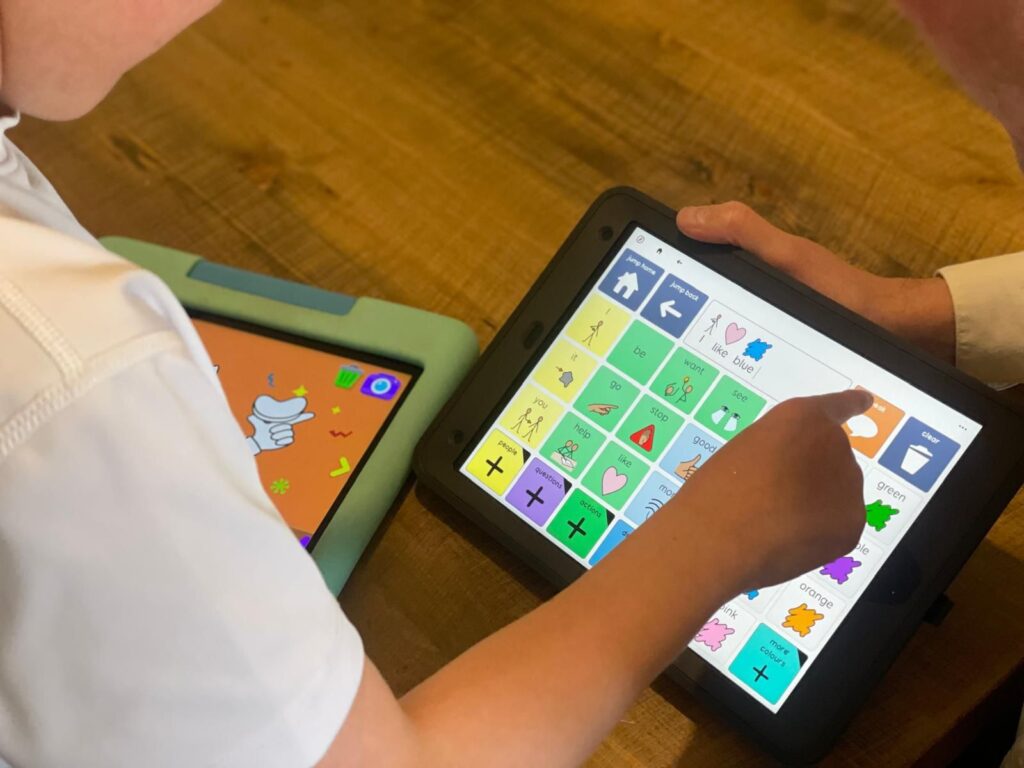
As teachers, we often talk about Assess, Plan, Do, Review. It sounds simple, but the real skill is making it work for a child in front of you, in a way that is motivating, meaningful, and realistic for everyday life.
This week I met with a child’s speech and language therapists (SaLTs) to complete the DAGG-3 (Dynamic AAC Goals Grid). The DAGG-3 helps a team take a clear look at where a child is right now, and where there may be gaps. It supports us to agree priorities and turn them into an intervention plan that is practical.
Assess: starting with what we can see
The assessment gave us a shared picture of the child’s current communication, and helped us identify next steps across areas like:
- Language (what words and sentence types they are using)
- Interaction (how they take turns, respond, and initiate)
- Operational skills (how they move around the AAC system and manage the device)
Just as importantly, it kept us grounded in what matters most: what the child wants to do, and what they need to be able to do.
Plan: choosing targets that fit the child
This child loves interactive games and enjoys novelty, so I planned playful, motivating activities to support the goals.
Development Matters (2023) captures this well: ‘Effective pedagogy is a mix of different approaches. Children learn through play, by adults modelling, by observing each other, and through guided learning and direct teaching’ (Development Matters 2023, p.10).
That mix is exactly what we aim for in AAC teaching.
Do: turning targets into a resource, Pizza! Pizza!
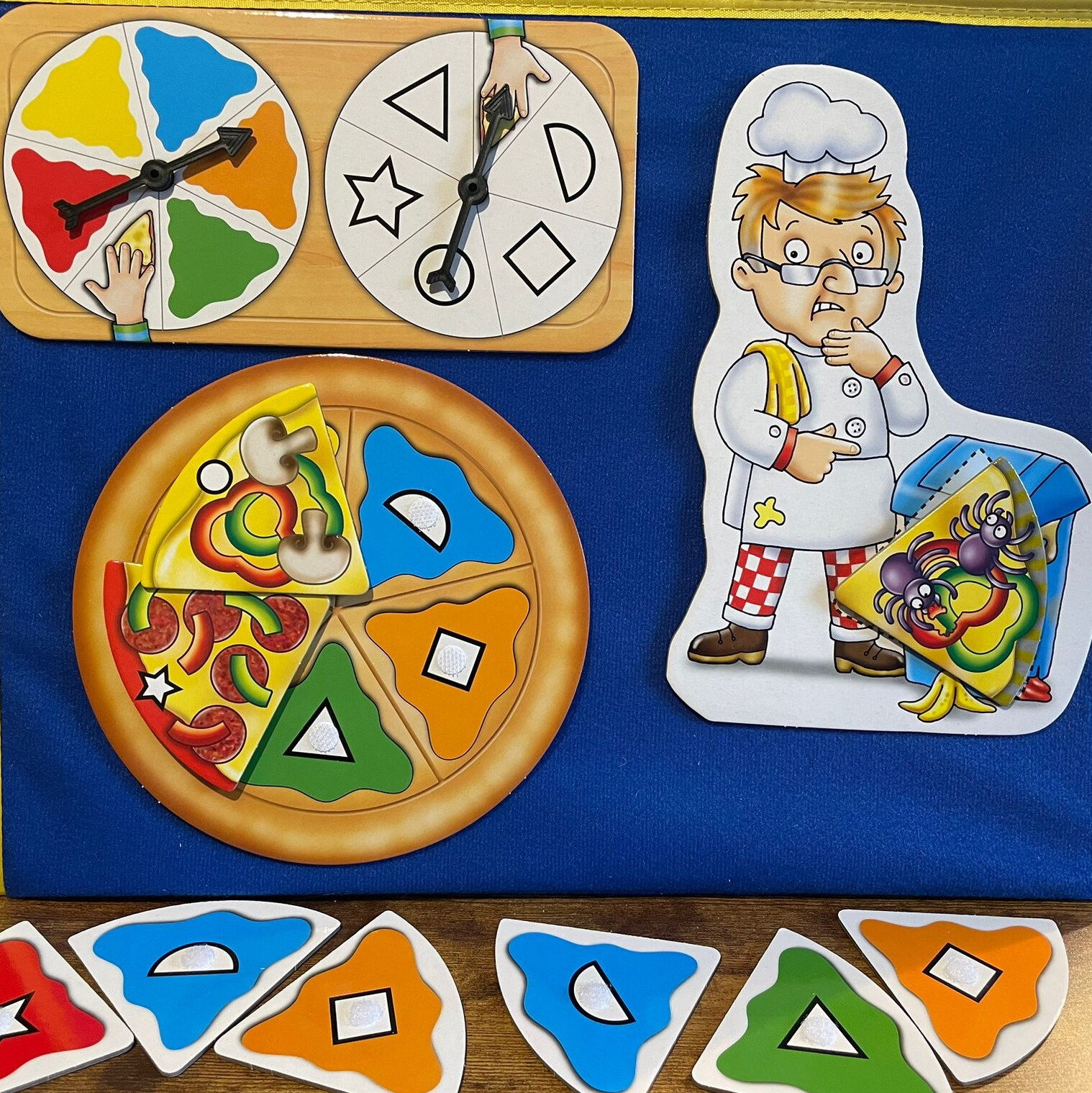
This week I developed a new resource to support some of the child’s DAGG-3 targets using Pizza! Pizza! (Orchard Toys).
I use Orchard Toys games a lot because they are colourful, fun, and well made, and they are easy to adapt. For this child, I added small Velcro dots so pieces could be placed on a fuzzy (loop fabric) board for clearer visual access.
This matters because for some children, especially those using eye gaze, it can be tiring and inefficient to keep looking down at a tray or table. Bringing the game up to eye level can make it more accessible when head control is limited and it can reduce the load on attention and organisation.
Keeping the play structured, but not restrictive
Yes, it is a board game, so there is some structure. But I keep the focus on:
- following the child’s lead
- being flexible with rules
- building shared enjoyment
- modelling without expectation (no pressure to “perform” communication)
At this stage, I am looking for spontaneous language over perfect turns.
Example targets we can teach through Pizza! Pizza!
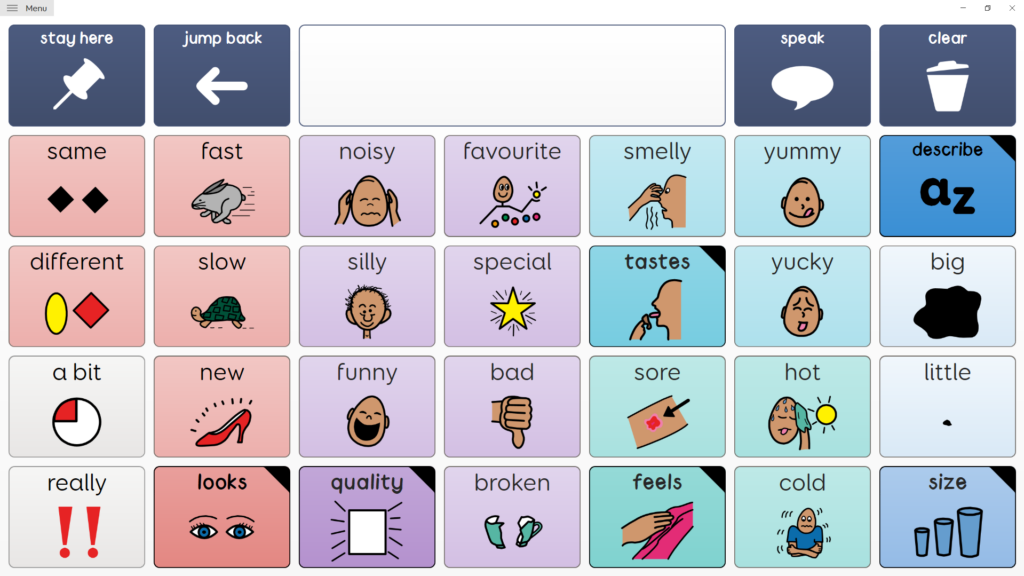
1) Description words (adjectives) in real activities.
Targets might include using description words during daily activities, and building a bank of adjectives.
This game gives lots of natural chances to model and practise adjectives such as:
- yummy / yucky
- good / bad
- same / different
- big / little
- colour words (six colours)
- shape words (six shapes)
My motto is, ‘Teach, not test’. Model naturally and repeat it in context.
2) Category and object words
The pizza toppings also support targets such as using object names from common categories.
A simple teaching move is to think aloud as you search for words on the device:
‘Let’s find pepperoni. I think it might be in food, then meat… There it is’.
That running narrative teaches vocabulary, and it teaches how to find vocabulary.
3) Using ‘more’ and ‘not’
We often model more during play, but Pizza! Pizza! also makes it easy to model not in a fun way:
- ‘not good’
- ‘not red’
- ‘not yummy’
- ‘not same’
- ‘not pineapple’
It keeps language playful and meaningful, and it shows that AAC is for opinions, not just ‘correct answers’. The aim is communication. There is no need to be right.
4) Operational competence (how the child uses the system)
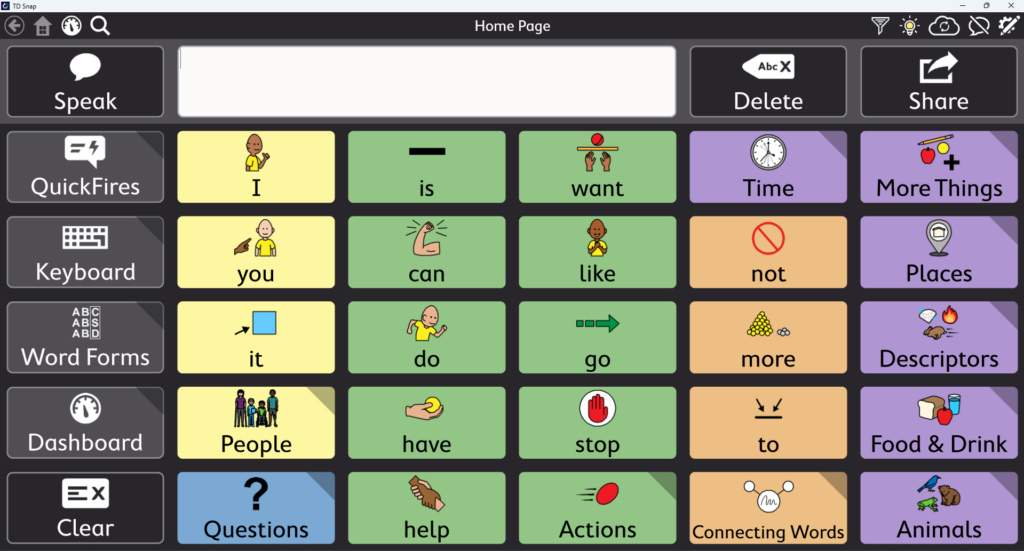
Some DAGG-3 targets are about navigating and managing the device, for example:
- exploring back, scroll, or swipe with partner support
- using a pause button
- navigating to pages for familiar topics or activities
Board games are brilliant for this because they create natural reasons to pause, search, and reset. I model that process out loud:
‘Oh, where is that back button again?’
‘Let me press pause so we can have a good look’
‘Pizza. I think I go to topics, then food, then… (pause)…’
The child learns that getting ‘lost’ is normal, and that communication partners can stay calm, playful, and supportive while problem-solving.
Review: small changes, noticed often
Review does not have to mean a big meeting. For me, it is the quiet noticing that happens every session:
- Which words are starting to show up more spontaneously?
- Which targets are still ‘adult-led’, and need more modelling?
- Is the page layout helping, or can we tweak it by reducing some elements?
- Do we need to simplify, add a shortcut, or build a new activity around the child’s current interests?
Conclusion
For me, Assess, Plan, Do, Review is not a paperwork cycle. It is a teaching mindset, and it shows up in the moment, and afterwards when I reflect and adapt.
We assess to understand the child today.
We plan around what matters to them and what will help them thrive.
We do the teaching through motivating, real activities.
We review, adapt, and keep going.
Always keep it playful. Always model. Always follow the child’s interests.
What everyday game or routine motivates your child most, and how could we use it to build communication?