When children play, they learn new words, new ideas and new ways of thinking. One of the easiest ways you can support this is by using running commentary, which means talking out loud about what your child is doing as it happens.
Development Matters, the official Early Years guidance in England, recommends that adults “provide a sensitive commentary on what a child is doing” and “narrate your own and children’s actions” to support early communication and thinking.
You can read the guidance here: DfE_Development_Matters_Report_Sep2023.pdf
For children who speak, hearing this simple, relaxed language helps them develop spoken vocabulary and their inner voice.
For children who use AAC, running commentary is still important, but it needs to be paired with something else.
Why modelling on the AAC system is essential
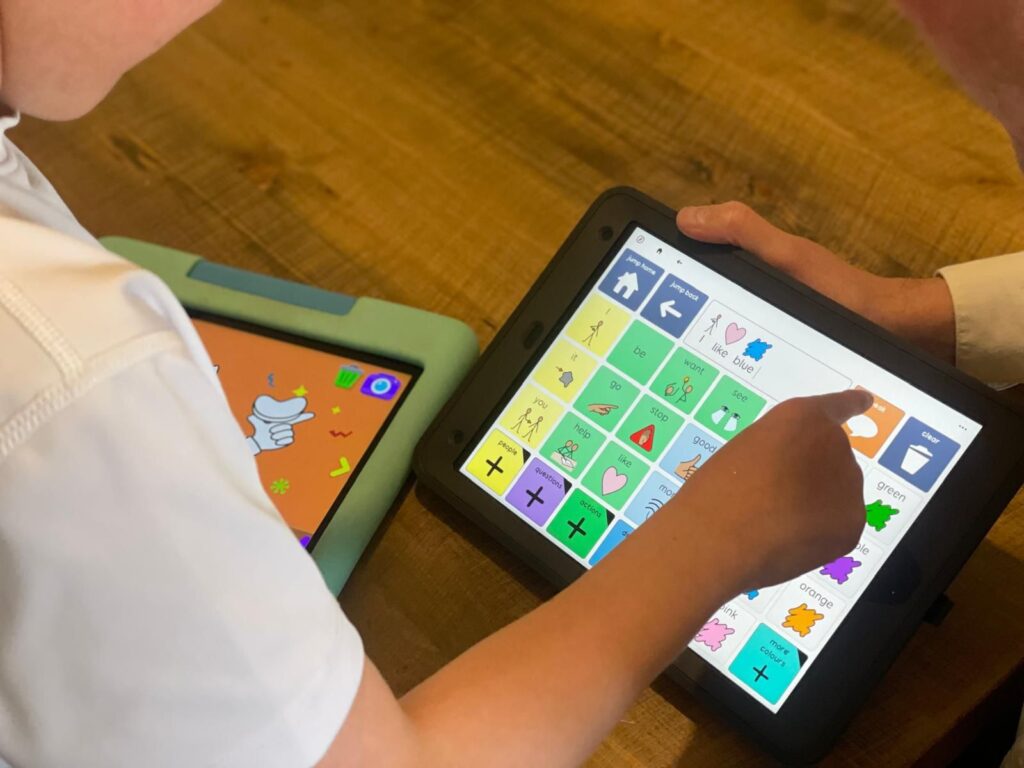
Children who use AAC learn language differently. They cannot easily turn your spoken words into words they can say themselves. If adults only speak, AAC users miss a key step, because they do not see where the words are on their device.
AAC is a language. If a child is going to use that language, adults need to show it to them.
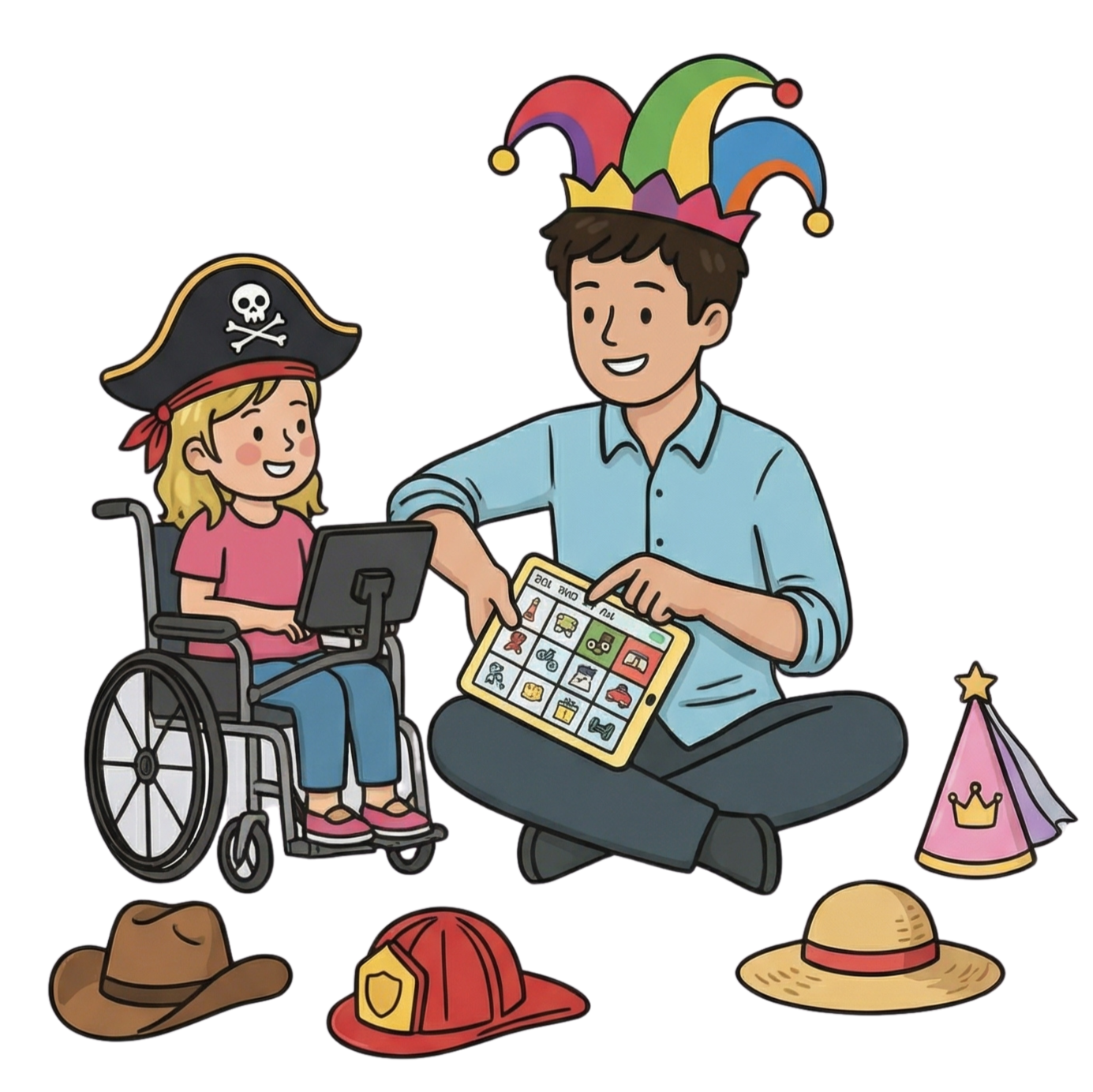
This is why modelling on the AAC system is essential. Development Matters encourages adults to model language, repeat key words, add detail and “talk about what you are noticing” during play. For AAC users, this includes showing those words on their device.
Running commentary + AAC modelling = strong language foundations
1. Running commentary (spoken language)
You describe what your child is doing in a simple, natural way:
- “You’re stirring.”
- “The car is going up.”
- “Big jump.”
This gives children clear, meaningful language during real experiences.
2. Modelling on the AAC system
You touch one or two important words as you speak:
- “Car go down.” → CAR + GO
- “More bubbles.” → MORE + BUBBLES
- “You want turn.” → WANT + TURN
You are not turning it into a lesson. You are simply showing how language works in both speech and AAC.
Why modelling matters so much
It shows your child where words live
AAC systems are big. Children need adults to show them how to find words.
It makes communication possible
AAC users cannot say words they have never seen modelled.
It reduces frustration
If a child wants to say more, go, help or stop, they need someone to show them where those words are.
It helps build their inner voice
Development Matters explains that children first learn to talk out loud, then develop inner speech. AAC users also need this early modelling so they can build their inner voice using their system.
A helpful tip from the guidance
Development Matters encourages adults to use far more comments than questions during play. This keeps interactions relaxed, avoids pressure and creates more opportunities for language modelling. AAC users benefit from this even more because questions can feel overwhelming if they cannot respond quickly on their device.
One final thought for parents
Play can be surprisingly tricky for adults. What came naturally when we were children often disappears as we grow up. Many parents feel unsure about how to play or how to join in. This is completely normal.
When you play with your child, try to create a bubble around the two of you. Block out the outside world for a few minutes. Slow down, tune in and get fully involved in what your child is doing. In that moment, you are helping them build their inner voice, their confidence and their communication skills.
Bring out your inner Peter Pan. Let yourself be playful, curious and enthusiastic. Follow your child’s lead. Join in with connection and warmth. Comment on what you see. Model a few words on their AAC system. Keep it simple, gentle and fun.
And remember, you are not meant to know where everything is on the device straight away. No one does. AAC takes practice. The more you model, the easier it becomes. Every small attempt helps your child learn.