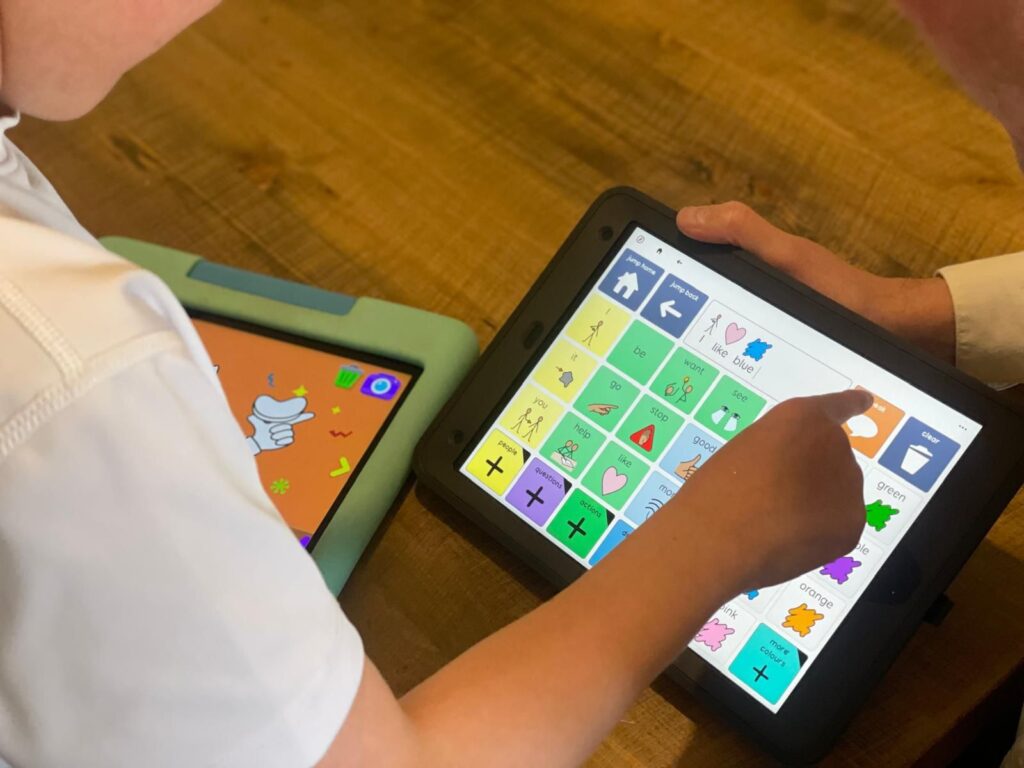
Technology is only part of the story. When I assess new clients, I often meet teams who have already done the hardest bit first. They have secured funding, sourced a device, chosen software, and put intervention in place. Everyone is hopeful. Then, a few months, or sometimes years, later the same questions start to appear.
“Why is it not being used?”
“Is the system wrong?”
“Do we need something different?”
My starting point is simple. Assistive technology works when the conditions around it work.
This idea helps me make sense of what we all see in real classrooms. The device can be excellent, but if the day-to-day conditions are not in place, it will not stick.
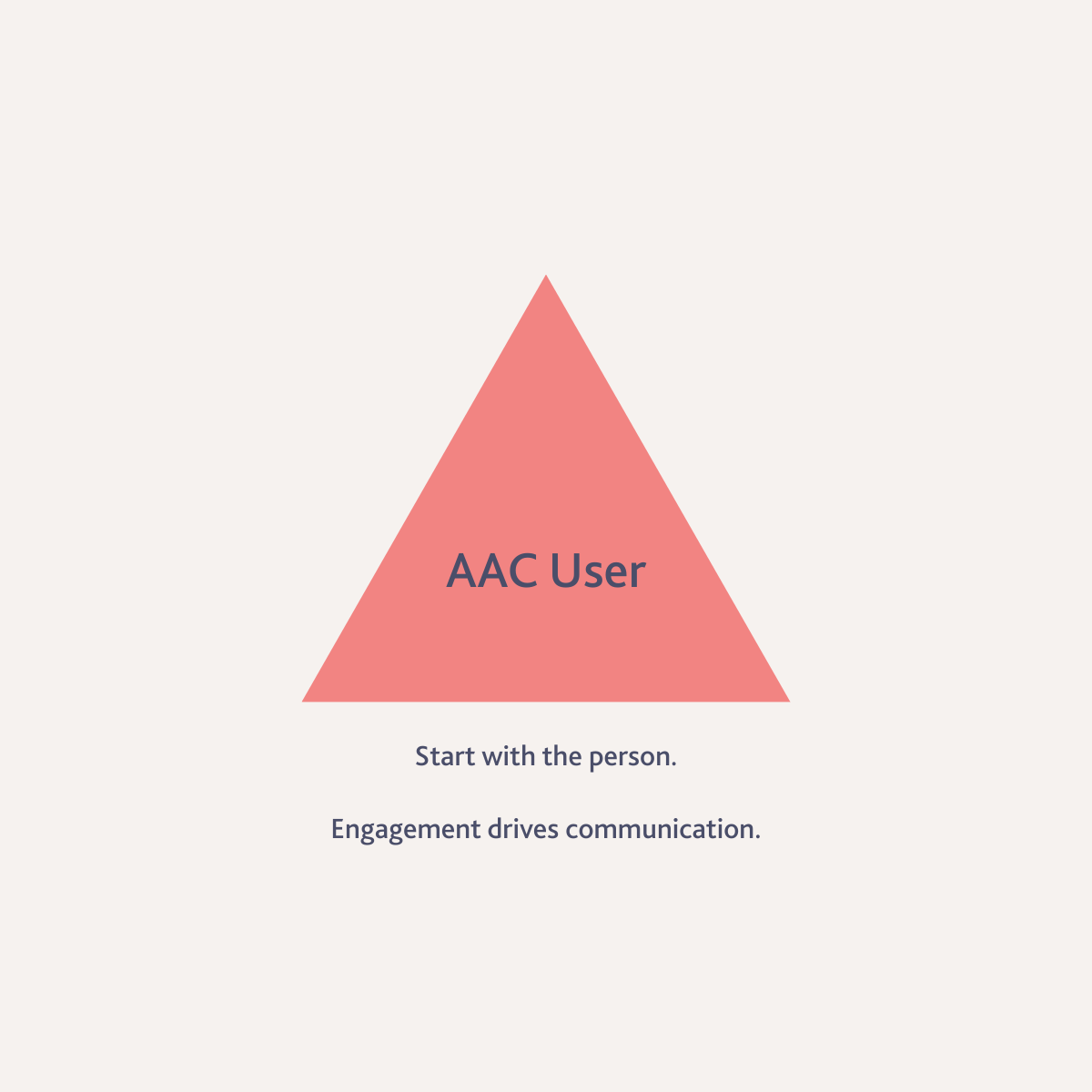
I tend to think of it like a triangle: Technology, People, Practice. Technology is the tool or system being used. People are the adults who help it be used. Practice is how consistently it is used across the day. The AAC user sits at the centre, because motivation and meaning drive communication, not the device itself.
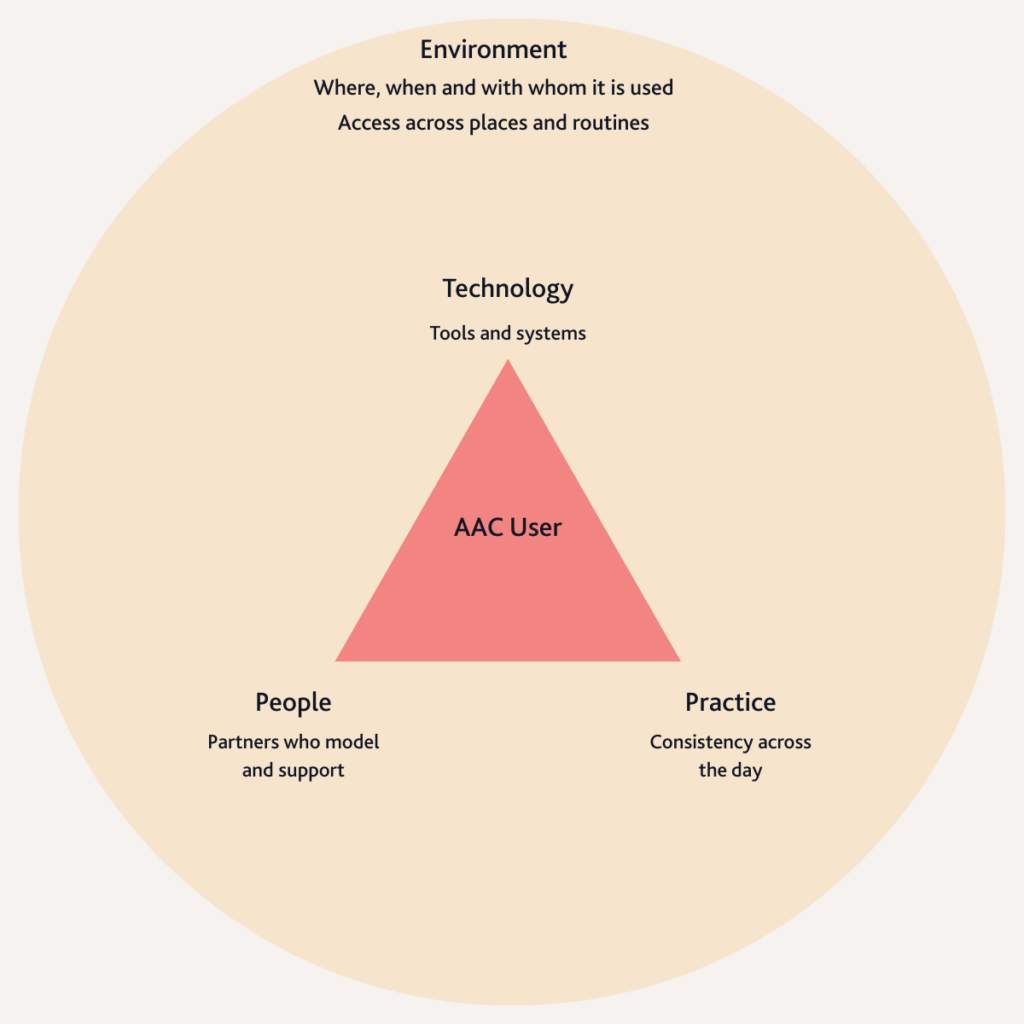
If you like a framework, the reassuring thing is that the bigger assistive technology models say the same thing, just in different language.
HAAT and i-HAAT both push us to start with the person and what they want to do, then look at the technology and the context around it. In other words, a person-centred approach.
The interdependence frame makes it even clearer that assistive technology is never “owned” by one person in practice. A device might be prescribed for an AAC user, but it is shaped by the people around them through modelling, prompting, troubleshooting, and small adjustments that remove barriers. AAC and assistive technology is a team effort.
DAGG-3 is helpful because it turns this into something practical. It recognises partner roles like modelling, cueing, and shared problem-solving as part of what progress looks like.
So what does this look like in a classroom, especially if you are a teacher who feels unsure about the tech?
It looks like starting with the assessment, then immediately shifting focus to the conditions.
Here are four questions I come back to again and again.
Do the adults know how to use it?
You do not need everyone to be an expert. You do need at least one or two confident people who can keep it running, model language naturally, and make small adjustments without panic. If staff are not confident, the technology becomes fragile, and it quietly disappears.
Is it embedded into routines?
AAC works best when it is part of what you already do: registration, snack, choosing and reading a book, joining a game at playtime. If it only comes out for a “communication time”, it will always feel like an add-on.
Is the access method right?
If access is hard work, it is unlikely to be used as often as hoped. Positioning, mount set-up, seating, fatigue, visual load, dwell time, switch timing, and sensitivity all matter. Access is also something we keep reviewing as the child grows and the environment changes.
Is it available where the child needs it?
Availability is a big one. If the device lives on a shelf, it will not become part of communication. If it is only available at certain times, it becomes a lesson resource rather than a voice. This is where mounting, cases, charging routines, and low-tech back-up boards make a real difference.
If you take nothing else from this post, let it be this: the assessment is the starting point. The real work is building the conditions that make AAC usable, day after day.
That is why I focus so much on shaping people and practice, not just selecting technology. They are the two areas I see most often underrepresented. When adults feel confident, and routines make space for communication, AAC stops being “a device we need to remember”, and starts being a normal part of classroom life.