AAC Assessment, Implementation and Ongoing Support

Helping every AAC user access the right system, the right tools and the right teaching to communicate with confidence.

AAC Assessment

Our assessment starts with the AAC user. We look at what engages them, what motivates them and what they want to do.
We speak to the people who know them best, including family, school staff and other professionals, to build a clear picture of their strengths, needs and goals.

By understanding their communication, access and learning profile, we can identify the right device, access method and teaching approach to support meaningful progress.

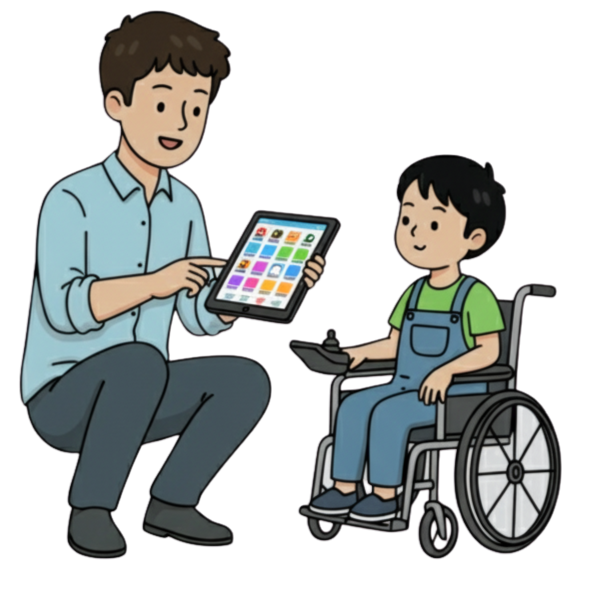
A practitioner kneels beside a boy in a wheelchair, modelling communication on a tablet AAC device.

Access Methods and Device Selection

We are highly experienced in finding the right access method for each AAC user. This includes switches, eye gaze, joysticks and direct touch, chosen based on how the child moves, learns and interacts.

We work closely with OTs, SaLTs and other professionals, bringing together assistive technology expertise and SEND teaching knowledge within a multi-disciplinary approach.

Our process is person centred and holistic. The device should fit the child, not the child fit the device.

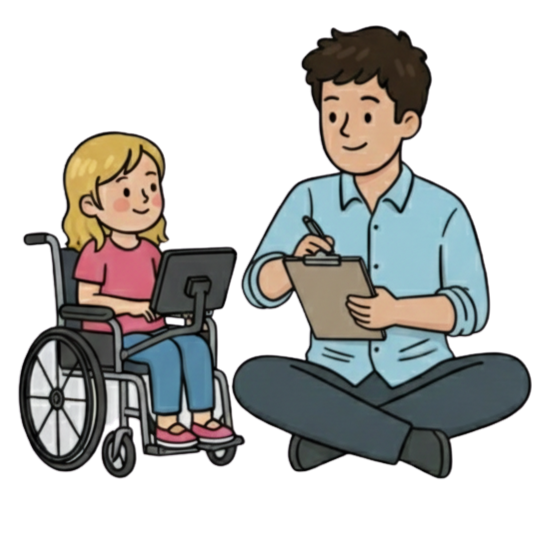
A practitioner sits on the floor taking notes while a young girl in a wheelchair uses a communication device mounted in front of her.

Device Setup and Implementation

Every device we set up is tailored to the AAC user. We reduce clutter, focus on what matters and make the layout easy to use for everyone involved.

We personalise vocabulary, organise pages around clear routines and simplify navigation so communication feels achievable, not overwhelming.
Settings, access options and visual supports are all adjusted to match the child’s strengths, preferences and goals.

Our aim is to create a device that works with the child, not against them, and that becomes a natural part of life at home and school.

Teaching-Led AAC Support

We use a play-based, teaching-led approach to help children learn AAC in meaningful, motivating ways. Through music, stories and hands-on play, we teach vocabulary in context and model language throughout each activity.

Every session is bespoke. We plan lessons around the child’s interests, needs and level of understanding, helping them build confidence, develop expressive language and use AAC across daily routines at home and school.

An adult wearing a colourful jester hat models words on an AAC device while sitting with a child in a wheelchair, who is using their own AAC device. Dress-up hats are scattered on the floor around them.

Training for Families and School Teams

Everyone who supports an AAC user needs the skills and confidence. Our training is hands-on, gradual and always pitched at the right level for each person involved.

We deliver bespoke training for families, school staff and wider professionals, focusing on modelling, vocabulary building and creating meaningful opportunities to use AAC throughout the day.

Our approach keeps the AAC user at the centre and reflects our family-powered values, recognising that families know their child best. We build relationships over time, developing trust and shared understanding so AAC becomes part of everyday life at home and in school.

A practitioner leads a sensory story session with children gathered around, including a girl in a wheelchair holding a switch.

Let’s understand your child’s communication needs together.

We’ll listen, explore options and plan the right support for your AAC journey.